Transporters say digital RTO shift is causing added difficulties
Transport operators complain new digital RTO system is creating more hurdles than help
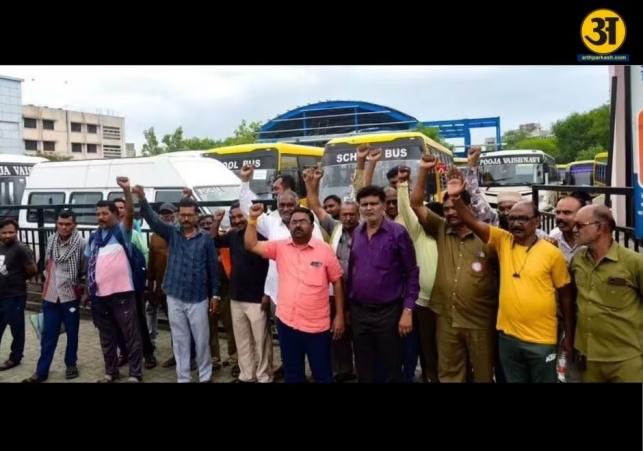
Transporters and vehicle owners in Ludhiana say that the Punjab government’s new faceless Regional Transport Office (RTO) system is making their work harder instead of easier. The system, introduced nearly a month ago, was expected to reduce crowds at RTO offices and help people complete important tasks online or through seva kendras. However, transporters claim that the process has become slower, costlier, and far more confusing.
The Punjab government launched the new system on October 29. Under this initiative, people no longer need to visit RTO offices for 56 major services linked to driving licences and vehicle registration. They can apply through local seva kendras or call the 1076 helpline. The aim was to reduce corruption and long queues, and allow people to do everything online in a transparent way.
But those who work in the transport sector say their day-to-day operations are now suffering. Transporters depend on quick approvals for vehicle permits, corrections in documents, and international driving permits (IDPs). Earlier, these procedures took time but were mostly predictable. Now, with all applications being routed through seva kendras, transporters say the system has slowed down even further.
Many applicants describe long waiting hours, repeated visits, and unclear instructions. They also say that the seva kendra staff are not trained enough to handle technical transport-related queries, causing delays at every step. For people whose business depends on timely paperwork, these delays mean heavy financial losses.
Darshan Singh, president of the Ludhiana Goods Transport Association, explained that the problem is serious. He said he has been trying for days to get permits for his commercial vehicles so they can travel to other states. Instead of smooth processing, his vehicles are stuck, and he is losing money every day. According to him, the system was meant to offer convenience, but it has become a source of frustration.
Other association members say that the new system must be improved. They believe that the current structure is not practical because applicants need guidance, and the staff at seva kendras are often too busy with many other government services.
Confusion at seva kendras and rising costs
Transporters also point out that only one seva kendra in Ludhiana—the one at the mini secretariat—has a dedicated window for RTO services. All other seva kendras ask applicants to take online appointments or apply digitally on their own. Because of this, transporters often end up depending on agents, which increases costs.
Jagdish Jassewal, the press secretary of the Ludhiana Goods Transport Association, said that operators at seva kendras are already handling multiple services such as birth certificates, pension schemes, and other government paperwork. Adding transport services without specialised training has, according to him, created chaos.
He also highlighted that the overall expense has gone up. Earlier, getting an international driving permit cost ₹1,000. Now, people must pay an extra ₹1,200 just to print the permit, and service charges are added on top. The total cost becomes much higher than before, especially for drivers who earn limited wages. For many, spending extra money on paperwork is becoming increasingly difficult.
ALSO READ: Dharmendra’s political journey reveals his surprising wish for absolute control
ALSO READ: When heart trouble hides: Why major artery blockages often show no symptoms
A senior RTO official, speaking on the condition of anonymity, clarified that even though services are now called “faceless”, the backend system has not changed. All states use a common national website named “Parivahan”, and Punjab uses the “Sarathi Parivahan” portal. These services were already available online for people who could apply themselves. He said that seva kendras only fill out the online forms on behalf of applicants and charge facilitation fees for doing so. After that, the documents are sent to RTO officials for checks and approvals.
The official explained that many applicants wrongly assume that seva kendras can complete the full process instantly. In reality, most tasks still need approval from RTO officers. This mismatch in expectations is causing frustration among transporters and applicants.
Another official, Assistant Transport Officer Deepak Thakur, added that people do not need special approval before applying for an IDP at seva kendras. However, they still have to visit the RTO office to get the final permit printed. This is because printing requires stamping the document with the national emblem. So even with faceless services, some physical steps remain compulsory.
Transporters argue that this defeats the purpose of calling the system “faceless.” They believe that if people still need to visit RTO offices for final steps, the government should ensure that the online process actually reduces workload rather than adding extra layers.
Many transporters fear that if the system is not fixed soon, small operators will suffer the most. They already work on tight schedules and cannot afford delays in permits, renewals, and approvals. Their vehicles often remain parked for days, which directly affects their daily earnings.
Transporters are now urging the government to make changes. They want better-trained staff at seva kendras, clearer instructions, reduced fees, and faster approvals. They say that only then will the faceless system truly help people instead of creating more confusion and burden.
Related News